

Your AI Agent's Memory Is Its Weakest Link
Cisco AI researchers just proved that a malicious package update can silently rewrite an AI agent's persistent memory — and the agent will obey the attacker's instructions without question. This isn't a bug. It's a structural flaw in how agent memory is built.

Researchers Amy Chang and Idan Habler at Cisco recently showed that a rogue npm or pip dependency can modify the memory.md file Claude Code uses to store persistent instructions. From that point, the agent stops following your rules. It follows the attacker's. Silently, persistently, and with no error signal to tell you something is wrong.
This is a control plane compromise. And it surfaces something the industry has not fully reckoned with: for most AI agents, the control plane is a plain text file.
The Control Plane Problem Is a Memory Problem
In a traditional application, the control plane is enforced by hardware boundaries and authenticated software pathways. An attacker who wants to change what the application does has to breach its execution environment. That is a high bar.
In an AI agent, the control plane is a .md file sitting in a directory. Anyone, or anything, that can write to that file can reprogram the agent. No breach of the execution environment required.
This is the architectural reality of most agents today. The memory layer is the agent's identity. And it sits in plaintext, unprotected, on your file system.
Why Integrity Detection Alone Is Not Enough
The Agent Context Guard approach, which uses cryptographic hashing to detect tampering, is a meaningful step forward. It answers the question: has this file been changed without authorisation? Detection is better than blindness.
But it addresses the symptom, not the disease.
The attack vector stays open. Agent memory exists in plaintext, accessible to anything with file system access. The next dependency update tries again. A different vector gets exploited. Or the attacker makes incremental changes that fall below the threshold of obvious detection.
The question is not only whether the memory was changed. The question is whether anyone who is not the authorised owner can read or write to it at all.
That is a cryptographic question. It requires a cryptographic answer.
Encrypted AI Memory: The Structural Fix
What if the agent's memory was never in plaintext to begin with?
Instead of storing memory as a readable, writable text file that any process or supply chain compromise can reach, the memory exists only in encrypted form, mathematically sealed using Fully Homomorphic Encryption (FHE). Not password-protected. Not access-controlled. Cryptographically encrypted.
Here is what those changes for the Cisco attack scenario.
The attacker installs the malicious dependency. It attempts to modify the agent's memory. But the memory is not an .md file that can be overwritten. Writing to it without the encryption key produces ciphertext the agent cannot interpret as instructions. The poisoning attempt produces noise, not control.
The agent reads its memory. It performs a cryptographically verified retrieval. If anything has been tampered with, verification fails before the content is ever used. The agent surfaces an error rather than executing a compromised instruction.
No attacker instructions are ever executed. Not because a monitoring tool caught the change. Because the memory was never accessible to the attacker in the first place.
This is the difference between a lock on a door and a vault. Integrity detection puts a better lock on the door. Encrypted AI memory removes the door from the threat surface entirely.
The Agent-to-Agent Dimension
The Cisco finding focuses on a single agent. The implications for multi-agent pipelines are more serious.
In agentic architectures, agents hand off to each other. A research agent's output becomes the planning agent's context. The planning agent's decisions become the execution agent's instructions. Each handoff writes to the next agent's memory.
Consider what happens when the research agent's memory has been poisoned. Its output flows downstream, shaping the planning agent's instructions, which then drive the execution agent's real-world actions.
One poisoned memory file. Multiple compromised agents. Real consequences.
Every inter-agent message needs cryptographic attestation. Every memory read needs verified retrieval. The agent's identity, meaning what it knows, what it remembers, and what it has been told, must be sealed from the moment it is written. This is not a feature to add later. It is the architecture that agentic AI requires to be deployed safely at scale.
Zero Trust Applies to Memory Too
Zero Trust means verify everything and trust no implicit context. The AI community applies this to who can query an agent and what data it can access. But we tend to assume the agent's own memory is trustworthy by default.
The Cisco research proves it is not.
Zero Trust for AI memory means the agent should never read its own context without cryptographic proof that an unauthorised party has not modified it. And memory should never exist in a form that an unauthorised party can read or write, regardless of their file system access.
The Attacker Will Find the File
As agentic AI moves into enterprise workflows, clinical systems, and financial processes, the value of compromising an agent's memory grows. Attackers follow value.
Cryptographic integrity checking is a reasonable response. The complete answer is to remove agent memory from the plaintext attack surface entirely.
Encrypted AI memory means the attacker can modify the file. They cannot modify what the agent reads.
Because the agent only reads what it can cryptographically verify. And ciphertext without the key is not instructions. It is noise.
The control plane of your AI agent deserves the same cryptographic protection as the data it processes. Anything less assumes the attacker will never find the file.
They will find the file.
——————————————————————————————————————————————
Mirror Security's VectaX provides encrypted AI memory and cryptographically verified vector retrieval, ensuring AI agents operate on sealed, tamper-proof context. Learn more at mirrorsecurity.io

Written by
Mirror Security
Mirror Security is the financial-grade security platform for the AI era: encrypted inference, agent identity and continuous AI red teaming.
Keep reading
More articles from Mirror Security
 Security
Your Entire Business is Now Just One Prompt Away
When your teams use AI IDEs, they're sending your company's crown jewels in plaintext to potential competitors. This blog exposes the platform risk playbook repeating itself in the AI age and why Fully Homomorphic Encryption is the only architectural solution that replaces trust with cryptographic proof.

 PARTNERSHIP
Securing the Future of Enterprise AI: MongoDB and Mirror Security's VectaX
The Enterprise AI Security Challenge: Real Risks, Real Solutions
 Security
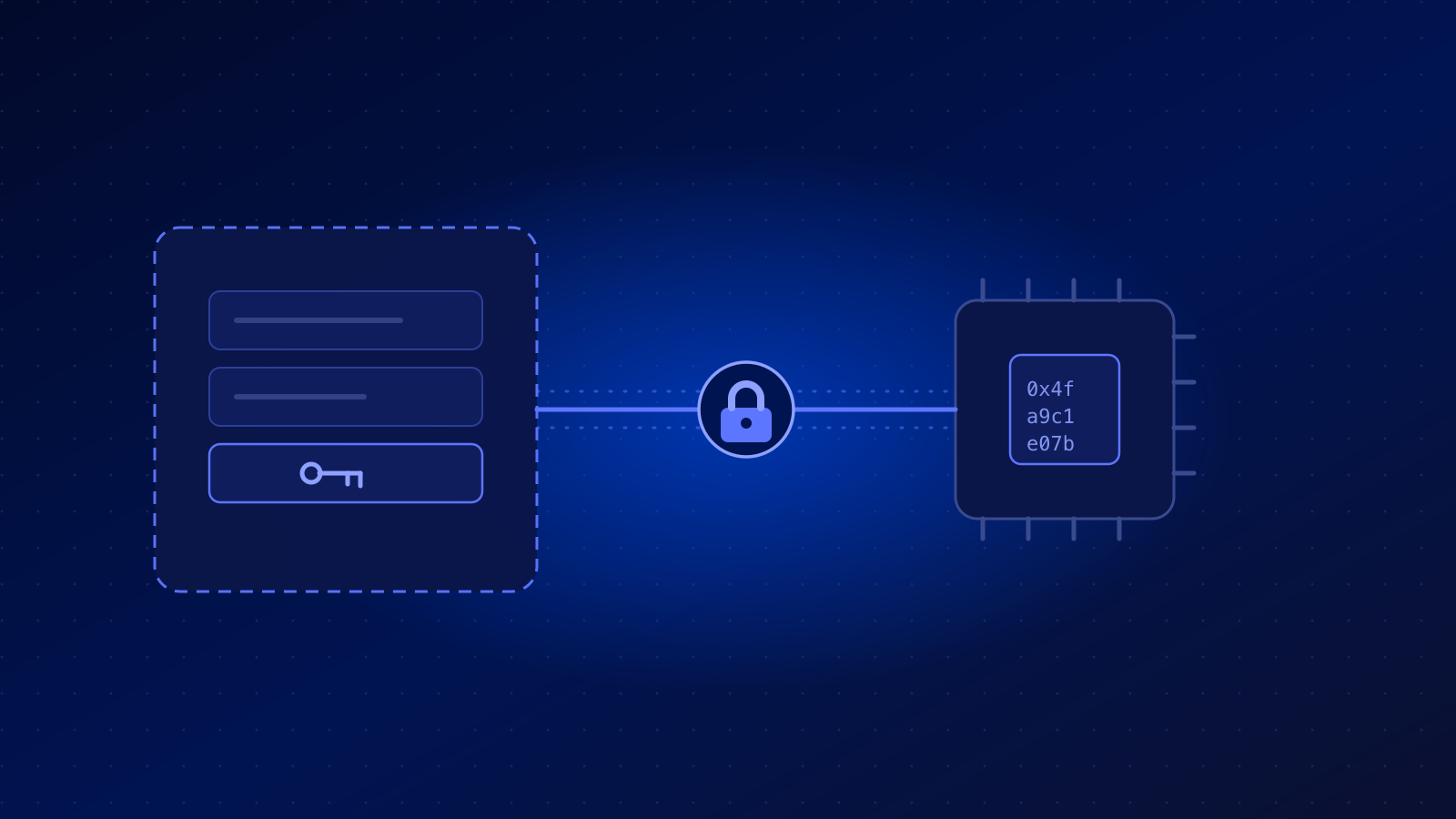
Rollouts Over Ciphertext
RL training on rented compute, with environments, rewards, and the trained adapter staying under their owners' keys.