

Blog
Engineering notes from the front line of encrypted AI.
Deep dives, founder essays, and technical write-ups from the team building Mirror Security.
 SecurityJul 20263 min read
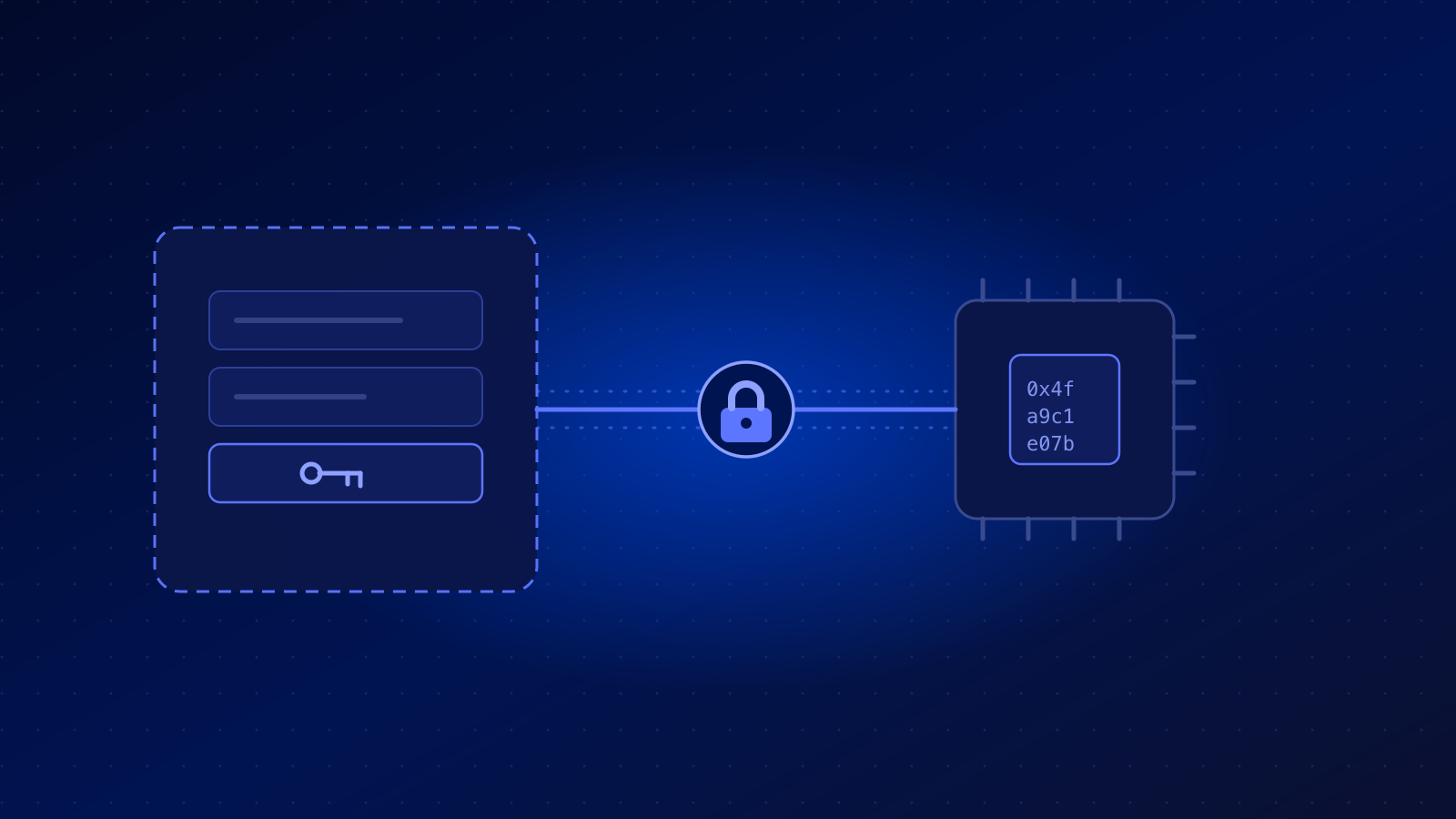
Rollouts Over Ciphertext
RL training on rented compute, with environments, rewards, and the trained adapter staying under their owners' keys.
Read Mirror SecurityMirror Security
 SecurityJul 20263 min read
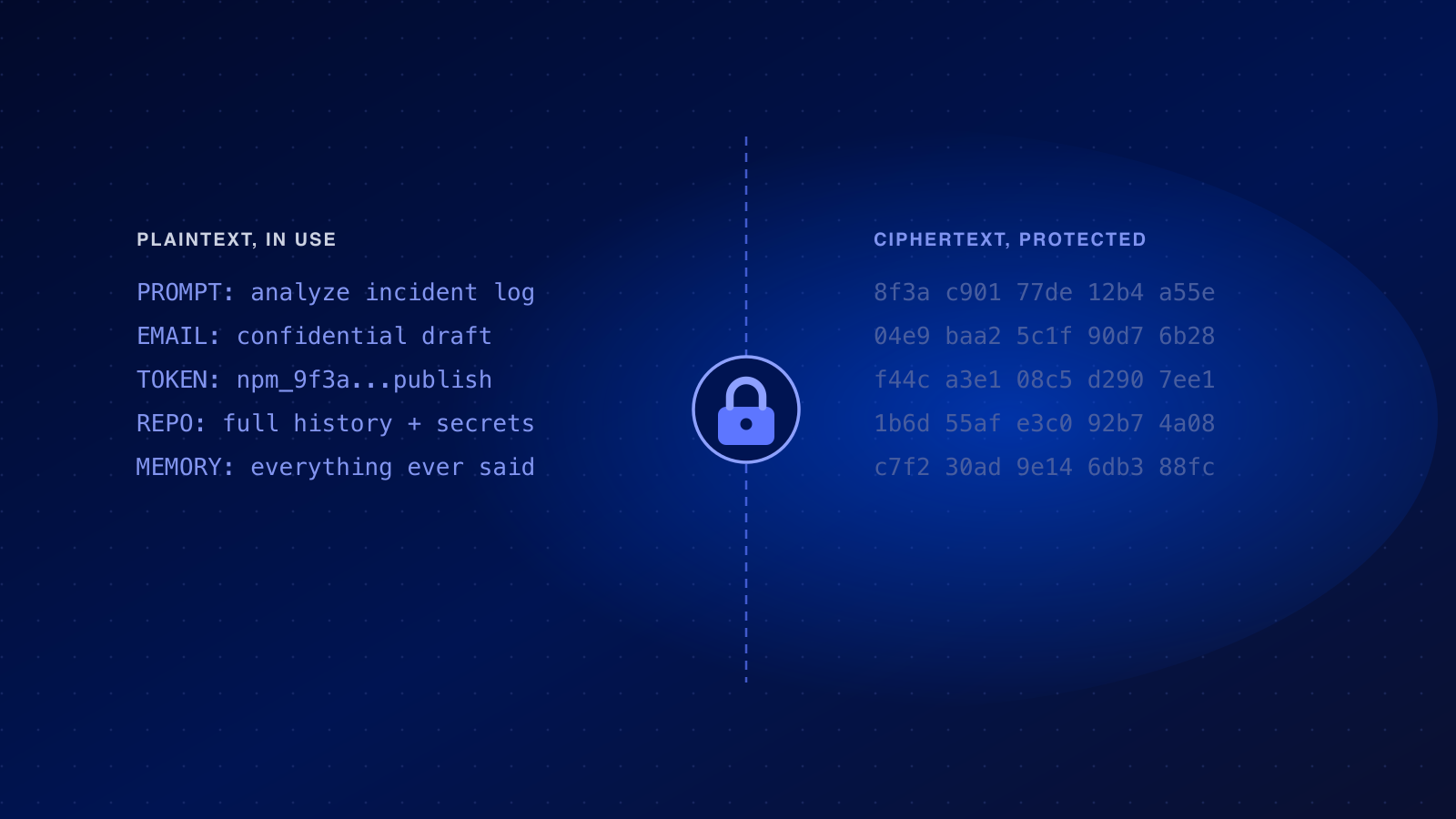
AI Security Has a Plaintext Problem
Six months of public incidents point at two architectural failures, and encryption at rest was never going to fix either one.
ReadMirror SecurityMirror Security SecurityApr 20263 min read
Trust in Security Is Not a Promise. It's a Proof.
Every AI privacy policy is still someone's word. FHE changes the architecture so the promise becomes unnecessary.
Read Krishna Kamal PalakaluriMirror Security
 Agentic SecurityApr 20263 min read
Your AI Agent's Memory Is Its Weakest Link
Cisco AI researchers just proved that a malicious package update can silently rewrite an AI agent's persistent memory — and the agent will obey the attacker's instructions without question. This isn't a bug. It's a structural flaw in how agent memory is built.
ReadMirror SecurityMirror Security SecurityMar 20263 min read
The Distillation Problem Has a New Answer: Make the Harvest Worthless
ReadMirror SecurityMirror Security Agentic SecurityMar 20263 min read
Zero Trust for AI Agents: Solving Identity and Access with AgentIQ
The Silent Security Crisis
ReadMirror SecurityMirror Security SecurityJan 20263 min read
The Encryption Gap: The Critical AI Security Vulnerability No One Is Talking About
Why 73% of CISOs are blocking AI adoption, and how cryptographic guarantees change everything
ReadMirror SecurityMirror Security SecurityDec 20253 min read
Sovereignty Without Verifiable Inference Is a Mirage
The sovereignty illusion
ReadMirror SecurityMirror Security SecurityNov 20253 min read
Make the Wire Boring: How Mirror Security Defeats Side-Channel Attacks on LLM Streaming
Your encrypted LLM streams are leaking secrets through timing patterns. We make the wire boring so attackers see nothing but noise.
ReadAnand Chugh and Krishna Kamal PalakaluriMirror Security SecurityNov 20253 min read
Your Entire Business is Now Just One Prompt Away
When your teams use AI IDEs, they're sending your company's crown jewels in plaintext to potential competitors. This blog exposes the platform risk playbook repeating itself in the AI age and why Fully Homomorphic Encryption is the only architectural solution that replaces trust with cryptographic proof.
ReadKrishna Kamal PalakaluriMirror Security IndustryAug 20253 min read
Vector Database Security: Key Considerations for Enterprise Adoption
As vector databases become increasingly critical to AI and machine learning workloads, enterprises are discovering that security capabilities often lag behind functional requirements. The rush to deploy vector search solutions has left many organizations exposed to significant security gaps, particularly in regulated industries where compliance isn't optional.
ReadMirror SecurityMirror Security SecurityJul 20253 min read
The Hidden Security Crisis in AI Coding Assistants - Code Exposure
The Hidden Security Crisis in AI Coding Assistants - Code Exposure
ReadMirror SecurityMirror Security SecurityApr 20253 min read
Secure Embedding MCP Server
How VectaX MCP Integration Delivers Enterprise-Grade Privacy and Security for AI Applications
ReadMirror SecurityMirror Security Risk AssessmentFeb 20253 min read
Conducting an AI Risk Assessment: A Comprehensive Guide for Modern AI Enterprises
A comprehensive guide to conduct a AI Risk Assessment for modern AI enterprises
ReadMirror SecurityMirror Security SecurityJan 20253 min read
DeepSeek R1 & R1-Zero: A New Milestone in Language Model Reasoning & Safe AI Adoption
DeepSeek R1 & R1-Zero: A New Milestone in Language Model Reasoning & Safe AI Adoption
ReadMirror SecurityMirror Security SecurityAug 20243 min read
Manipulating Prompts and Retrieval-Augmented Generation for LLM Service Providers
The paper titled "Manipulating Prompts and Retrieval-Augmented Generation for LLM Service Providers" published by Mirror Security research team, explores significant security vulnerabilities associated with large language models (LLMs) and their service providers. It highlights two primary attack vectors: the manipulation of generative search engines and the injection of biased content into LLM outputs. This blog will summarise the key findings and implications of the research.
ReadMirror SecurityMirror Security SecurityAug 20243 min read
Navigating the Risks: PromptWare's Impact on GenAI Security
A recent study has revealed significant vulnerabilities in Generative AI applications due to emerging threats known as PromptWare. Researchers demonstrated how these threats can manipulate GenAI models, effectively jailbreaking them and disrupting their intended functions.
ReadMirror SecurityMirror Security SecurityJul 20243 min read
Privacy Leaks in GenAI Solutions: A Growing Concern
As we continue to leverage the power of Generative AI (GenAI) in our enterprise & consumer facing solutions, it's crucial to acknowledge the significant privacy risks that come with these technologies. Recent incidents have highlighted the importance of robust data security measures to prevent privacy leaks.
ReadMirror SecurityMirror Security SecurityMar 20243 min read
Steering Through New Norms: The Impact of MeitY's Advisory on India's AI and Startup Sector
On March 1, 2024, the Ministry of Electronics and Information Technology (MeitY), under the Government of India, issued a significant advisory emphasizing the due diligence required by intermediaries/platforms under the Information Technology Act 2000 and Information Technology (Intermediary Guidelines and Digital Media Ethics Code) Rules 2021. The advisory, stemming from previous guidelines issued on December 26, 2023, highlights the government's increasing concern over the responsible use of Artificial Intelligence (AI), particularly in the context of Generative AI (GenAI) technologies.
ReadMirror SecurityMirror Security